HOW TO PREVENT PIPES & HOSES FROM FREEZING DURING WINTER

Close-up of a snowflake resting on a layer of snow, illustrating winter conditions relevant to preventing freezing pipes and home maintenance tips.

Even though we live in the south, we still run into the issue of freezing pipes. To help prevent this, there are a few options you can choose from.

1. Keep the water on the outside of your house running with a little drip; nothing drastic.

2. You can also turn the water to the outside off completely and let it all drain out and dry. This means you should also drain the hoses attached to your house to make sure no standing water is left. If there is no water, there should be nothing to freeze.

3. The last option is to buy a faucet cover, to put over the faucet on the outside of your home. Faucet Protectors (Frost King FC1) are a cheap and great way to keep the pipes from freezing over. These are caps that create an air-tight barrier around your pipes, so that the water will not freeze inside. This also helps with insulation for the house! These tips will help you in a more preventative manner, but if you do have issues with your pipes freezing over, please give us a call here at Keep Smiling Plumbing! We will be more than happy to assist you with any plumbing needs you may have.

HOW TO RESET A GARBAGE DISPOSAL

Modern gray house with a blue front door, surrounded by well-maintained landscaping and a clear blue sky, illustrating home maintenance and improvement themes relevant to Keep Smiling Plumbing Electric Heating and Cooling services.

In today’s fast-paced world, homeowners rely on the convenience of modern appliances to make daily tasks more manageable. One such appliance that has become a kitchen staple is the garbage disposal. This powerful device makes quick work of food waste, helping to keep kitchens clean and odor-free. However, like any mechanical device, garbage disposals can encounter hiccups from time to time. Often, a simple reset is all it takes to get them back up and running smoothly. In this guide, brought to you by Keep Smiling Plumbing & Electric, we’ll walk you through the steps to reset a garbage disposal and keep your kitchen running efficiently.

1. Prioritize Safety Before attempting any troubleshooting. It’s crucial to prioritize safety. Always ensure the garbage disposal is switched off and unplugged from the power source.

2. Avoid putting your hands or any foreign objects down the disposal unit, even when attempting a reset. Accidents can happen, so it’s better to take precautionary measures.

3. Locate the Reset Button. Most modern garbage disposals come equipped with a reset button. It is typically a red or black button located on the bottom or the side of the unit. Before proceeding, locate this reset button, as it will be the key to resolving many common issues.

4. Press the Reset Button. Once you’ve found the reset button, it’s time to perform the reset. Firmly press and hold the button for about 10 to 15 seconds. This action will reset the garbage disposal’s internal circuitry, clearing any minor jams or glitches that may have caused it to stop working.

5. Check for Blockages. If the reset doesn’t solve the problem, there might be a blockage causing the disposal to malfunction. Again, ensure the unit is switched off and unplugged. Use a flashlight to inspect the disposal chamber for any foreign objects or food particles that might be obstructing the blades. Avoid using your hands; instead, use long-handled tongs or pliers to remove any debris you find.

6. Use the Wrench. Some garbage disposals come with a special wrench (usually an Allen wrench) that fits into the bottom center of the disposal. This tool allows you to manually turn the disposal’s motor and free any stuck impellers or debris. Insert the wrench into the hole and give it a few turns clockwise and counterclockwise. This process should help to dislodge any obstructions.

7. Restore Power and Test. After completing the reset, removing blockages, and using the wrench, plug the garbage disposal back into its power source. Run some cold water, turn the disposal on, and listen for any unusual noises. If the disposal runs smoothly, the problem is likely resolved. However, if it still doesn’t work or you notice any strange sounds, it might be time to call in a professional plumber to diagnose and fix the issue.

I conclusion, a well-functioning garbage disposal is a kitchen game-changer, making cleanup and waste management a breeze. When your disposal encounters a hiccup, performing a reset is often the first step to getting it back on track. Remember, safety is paramount throughout the process, so never forget to unplug the unit and exercise caution. If you find yourself in a situation where the reset doesn’t solve the problem, don’t hesitate to seek the expertise of a professional plumber from Keep Smiling Plumbing, Electric, Heating & Cooling. Our team of skilled professionals is always ready to assist with any plumbing, electrical or HVAC issues you may encounter. Keeping your home running smoothly and efficiently is our top priority, so don’t hesitate to reach out for help.

Related Articles

TOP REASONS TO INSTALL A GARBAGE DISPOSAL IN YOUR HOME

HOW TO FIX A KITCHEN SINK DRAIN CLOG

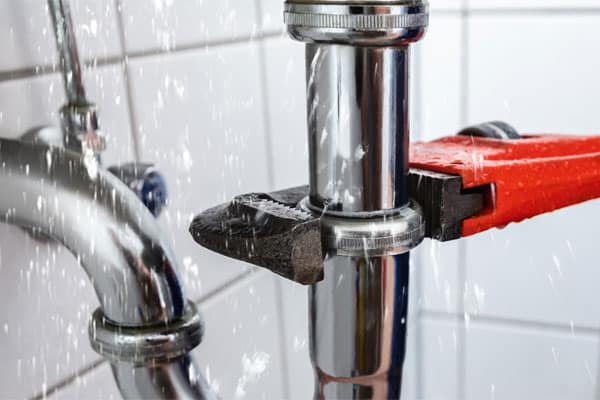
Plumbing repair with a wrench on a leaking pipe, water spraying, emphasizing plumbing services by Keep Smiling Plumbing Electric Heating and Cooling.

A clogged kitchen sink drain can quickly turn from a minor inconvenience to a major headache. Standing water in the sink, foul odors, and slow drainage are all signs of a drain blockage that require immediate attention. But fear not! With the right tools and a bit of know-how, you can easily tackle this common household issue. In this guide, brought to you by Keep Smiling Plumbing & Electric, we’ll walk you through the steps to fix a kitchen sink drain clog and have your kitchen back to its sparkling self in no time.

Step 1:

Safety First Before you start any DIY plumbing project, remember to prioritize safety. Turn off the water supply to the sink to avoid any accidental water spillage or leaks while you work. Additionally, clear the area around the sink to have enough space to maneuver comfortably.

Step 2:

Gather Your Tools Keeping all the necessary tools ready will save you time and frustration. For this task, you’ll need: Plunger: A basic plunger with a cup-shaped rubber head is a must-have for every homeowner. It works wonders on simple clogs. Plumbing Snake (Auger): A plumbing snake is a flexible tool used to reach deep clogs that a plunger can’t handle. Baking Soda and Vinegar: These household items can be a natural alternative to harsh chemical drain cleaners. Bucket and Old Towels: To catch any excess water and keep your workspace clean. Wrench: In case you need to remove any pipes.

Step 3:

Plunge Away For minor clogs or ones located close to the sink drain, a plunger can be a lifesaver. Ensure the sink is filled with enough water to cover the rubber cup of the plunger. Then, place the plunger over the drain and pump it up and down with quick, forceful movements. The pressure should dislodge the blockage and allow the water to flow freely again.

Step 4:

Try the Plumbing Snake If the plunger doesn’t do the trick, it’s time to bring out the plumbing snake. Insert the snake’s end into the drain and start turning the handle clockwise. Keep pushing the snake until you feel resistance. This resistance usually indicates that the snake has reached the clog. Continue turning the snake to break up or hook onto the obstruction, then pull it out gently.

Step 5:

Baking Soda and Vinegar Magic For environmentally-friendly homeowners, baking soda and vinegar can be an effective alternative to harsh chemicals. Start by pouring half a cup of baking soda down the drain, followed by one cup of vinegar. Let the mixture fizz for about 30 minutes to break down the clog. Finally, flush the drain with hot water to clear any remaining debris.

Step 6:

Check the P-Trap If the clog persists, the problem may lie deeper in the plumbing. Underneath the sink, there’s a U-shaped pipe called the P-trap. Place a bucket under the P-trap to catch any water, then use a wrench to carefully remove the trap. Clean it thoroughly and remove any debris. Reattach the P-trap, ensuring it’s tightly secured.

Step 7:

When to Call the Professionals If you’ve followed all the steps above and the kitchen sink drain remains clogged, it may be time to call in the experts. Keep Smiling Plumbing & Electric has a team of skilled technicians ready to help with any plumbing issues you may encounter. Our professionals have the experience and tools to diagnose and resolve even the most stubborn drain clogs efficiently.

Conclusion:

Clearing a Kitchen Sink Drain Clog Dealing with a kitchen sink drain clog doesn’t have to be stressful. Armed with the right tools and a bit of DIY knowledge, you can often tackle the problem on your own. Remember to stay safe, be patient, and if all else fails, don’t hesitate to call in the experts at Keep Smiling Plumbing & Electric. A clear and functioning kitchen sink is a key ingredient for a happy home, so don’t let a pesky clog get in your way!